CN


By Editorial Team, Net Zero Age
The 15th Five-Year Plan is the first five-year plan to see China shift fully from “dual control of energy consumption” (restricting both the total amount of energy used and the energy intensity) to “dual control of carbon emissions” (controlling both total carbon emissions and carbon intensity). This five-year plan is decisive if China is to achieve the goal of peaking carbon emissions before 2030.
With the rapid roll out of “dual control of carbon emissions” (also known as “dual carbon control”), local developments are facing new challenges: stabilising economic growth, advancing investment projects, safeguarding livelihoods, as well as meeting carbon-reduction targets with limited additional emissions headroom.
The practical issue of how to coordinate development and emissions reduction within this limited space has become a question that local governments must answer.
During the 14th Five-Year Plan, China achieved significant progress in energy conservation and emissions reduction. Nationwide, energy intensity fell cumulatively by about 16.1% (excluding non-fossil consumption, feedstock use and other factors), while carbon intensity fell by about 17.7%.
At the same time, energy consumption grew relatively quickly during the 14th Five-Year Plan, with total national energy consumption up by about 1.205 billion tonnes of standard coal year-on-year, far exceeding the additional 680 million tonnes of standard coal consumption during the 13th Five-Year Plan.
Apart from the rise in total energy consumption, changes in the energy consumption elasticity coefficient are also worth noting. During the 12th and 13th Five-Year Plans, the average energy consumption elasticity coefficients were 0.47 and 0.49 respectively, while in 2023 this figure surpassed 1 for the first time in history.
A higher energy consumption elasticity coefficient indicates that energy consumption is growing faster than the economy, and that economic growth has become more reliant on energy use. If this coefficient remains relatively high, it usually implies that there is more pressure to improve energy-use efficiency.
The situation is closely linked to China’s domestic industrial structure, its role in the global division of labour within industrial chains, and the international energy and economic environment.
Electricity consumption has followed a similar pattern. During the 14th Five-Year Plan, growth in total electricity use across society was higher than in the 12th Five-Year Plan and the 13th Five-Year Plan, and the overall electricity consumption elasticity coefficient has also been trending upward. Of total national electricity consumption, secondary industry accounted for about 53%, while tertiary industry and residential use accounted for 27.5% and 17.3% respectively.
Therefore, particular attention should be paid to the efficiency of energy and resource use when planning the industrial structure during the 15th Five-Year Plan. Looking at the sectors that largely drive energy demand, it is evident that China’s industrial energy-use structure is undergoing a shift.
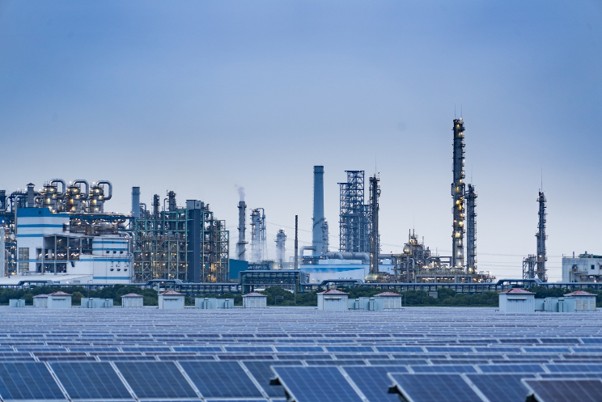
Energy consumption in the steel and building materials sectors has become relatively stable, while petrochemicals, chemicals and emerging industries are still expanding. The increase in coal consumption mentioned above stems mainly from new coal-fired power generation and use within the chemicals industry.
New business models, new forms of activity and new industries are also driving electricity demand growth. Developments in the “new three” sectors (electric vehicles, lithium-ion batteries, and solar products), data centres and 5G base stations, together with the trend towards industrial digitalisation and the shift towards AI and machine learning, are together pushing up electricity consumption.
The outline of the 15th Five-Year Plan sets out clear arrangements intended to work actively and steadily towards peak carbon emissions.
First, it calls for the full implementation of a “dual control” system for total carbon emissions and carbon intensity, with the gradual introduction of policies and institutions, such as local carbon-performance assessments, sectoral carbon management, corporate carbon management, project carbon evaluation, and product carbon-footprint systems.
In terms of sectoral carbon management, the main task is to establish mechanisms for industries to control carbon emissions, which include strengthening accounting capacity and monitoring and early-warning systems for industrial carbon emissions. The outline also specifically proposes coordinated governance of production capacity and “dual carbon control”.
As for product carbon footprint systems, the 15th Five-Year Plan mandates the formulation of accounting rules and standards for product carbon footprints, as well as the publication of emission-limit standards for key products, alongside systems for product labelling and certification. Local carbon-performance assessment and project carbon evaluation are discussed in detail below.
Second, the outline calls for energy conservation and carbon reduction in key sectors. Two points are worth noting here: first, although energy intensity is no longer a key assessment indicator during the 15th Five-Year Plan, the Plan’s outline still mandates a reduction of around 10% in energy intensity per unit of GDP.
The outline also calls for accelerated efforts to ensure that newly-added electricity demand is covered by newly-added clean-energy generation, and to bring coal and oil consumption to a peak.
In short, this is the concept of “two coverages” - new clean energy must power all growth in electricity and energy consumption.
Overall, there is already a solid foundation for China’s “two coverages”. For example, by the end of the 14th Five-Year Plan, the coverage of newly added electricity consumption had exceeded 100%, while the coverage rate for newly added energy has also been rising steadily.
However, it should be noted that the coverage level is closely linked to the amount of new clean energy added in a given year, so it is somewhat volatile. Therefore, even after full coverage is achieved, it is expected to fluctuate during the 15th and even the 16th Five-Year Plan.
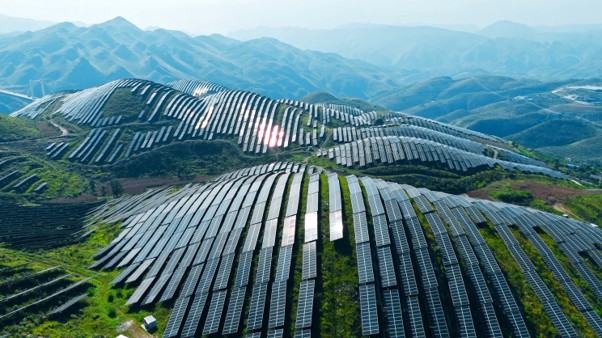
The outline also sets out a number of quantitative targets for key sectors. For example, it calls for energy savings of more than 150 million tonnes of standard coal in key industries and sectors, and for coal substitution to reach 30 million tonnes a year. These two tasks are closely linked to achieving a peak in coal consumption during the 15th Five-Year Plan.
The outline also restates China’s goal of building around 100 national zero-carbon industrial parks. As for non-CO2 greenhouse gases, the aim is to build emissions-reduction capacity equivalent to 30 million tonnes of CO2.
Overall, the 15th Five-Year Plan represents a decisive phase in the journey towards peak carbon emissions, with key work focusing on four areas: supply, industry, consumption, and institutional rules.
Supply
On the supply side, incremental constraints under the “two coverages” framework need to be established, while the development of a new power system is to be accelerated to improve the grid’s regulation and security capabilities.
Industry
In terms of industry, particular attention is to be paid to the energy consumption elasticity coefficient, that is, the economic yield per unit of industrial energy consumption.
The outline calls for both expansion and contraction: on the one hand, introducing new industries, new business models and new forms of activity with lower carbon emissions and lower energy intensity; on the other hand, phasing out outdated capacity, making full use of energy-saving reviews and implementing carbon-emissions replacement mechanisms to control the carbon emissions of new projects at source.
consumption
As for consumption, the priority is to strengthen full-chain management and savings across all kinds of resources, vigorously develop the circular economy, and promote green and low-carbon ways to live and work.
Institutional rules
In terms of institutional rules, effective implementation of “dual control” for total carbon emissions and carbon intensity is vital.
A major focus for all parties is the requirement for equivalent or reduced carbon-emissions substitution in the case of new, expanded and rebuilt high-energy-consuming and high-emission industrial projects. The main aim of this rule is to ensure that new projects in a given area no longer result in additional carbon-emissions.
The 15th Five-Year Plan outline states its aim to “cut carbon dioxide emissions per unit of GDP by a total of 17%”. The emissions-reduction target is based mainly on China’s nationally determined contribution (NDC) commitment to “reduce carbon dioxide emissions per unit of GDP by 65% or more from the 2005 level by 2030”.
With China's carbon intensity down 57.7% from 2005 levels by the end of 2025 according to current accounting methods, it can be inferred that an additional 17% reduction is required during the 15th Five-Year Plan (2026–2030) to stay on track for national climate goals.
GDP growth during the 15th Five-Year Plan is anticipated to be between 4.5% and 5%, and so, taking into account the target of 17% reduction in carbon intensity as well as the 2025 carbon emissions baseline, China’s headroom for additional carbon emissions during the 15th Five-Year Plan is essentially fixed. All livelihood-related development must fit within this strict limit if China is to achieve peak carbon emissions by 2030.
Nonetheless, it is already clear that there will be some incremental growth over the 15th Five-Year Plan.
For example, growth will come from new coal-fired power generation to provide flexibility resources, “two high” projects (high-energy-consuming and high-emission projects) that have already been approved or are under-construction, strategic reserve projects, and inevitable additional consumption within sectors such as urban and rural housing and transport.
At the same time, the steel and cement industries will deliver the most notable emissions reductions, as market conditions and shrinking capacity drive down emissions.
Taking the above increases and decreases into account, the room for additional emissions is very limited.
A key question arises: where is the space for new projects?
It seems clear that, if local governments want to build new “two high” projects, they must carry out equivalent or reduced carbon-emissions substitution.
The trigger mechanism for equivalent or reduced substitution is from the “Measures for the Energy Conservation Review and Carbon Emissions Assessment of Fixed Asset Investment Projects,” issued by the National Development and Reform Commission in 2025.
This mainly covers the following aspects:
first, emissions reductions from capacity cuts, such as the closure or conversion of existing industrial projects;
second, emissions reductions from energy-saving retrofits, where existing industrial projects reduce their emissions by implementing energy-efficiency technological upgrades;
third, emissions reductions from energy transition, where existing industrial projects optimise their energy mix and replace fossil fuels with clean energy;
fourth, emissions reductions from coal reduction, meaning cuts achieved by reducing coal consumption in the region.
Finally, some space is also left for emissions reductions achieved by other means.
In 2024, the General Office of the State Council issued the “Work Plan for Accelerating the Establishment of a Dual Control System for Carbon Emissions”, which set out three key tasks for local carbon assessments: target allocation, evaluation and assessment, and carbon budgeting.
Target allocation means that the national target is broken down to the provincial level, and then each province further allocates it to the prefecture and city level: prefecture-level cities are no longer required to break it down further.
“Evaluation and assessment” refers to the issuance of assessment measures, the clarification of assessment methods, and the supervision of target implementation. In this process, the key tool for local governments is carbon budgeting: during the 15th Five-Year Plan, a provincial- and municipal-level carbon emissions budget management system is to be gradually introduced, with full-process management implemented during the 16th Five-Year Plan.
Regarding target allocation, because the room for emissions growth during the 15th Five-Year Plan is relatively limited, development conditions vary significantly across regions, and the baseline for carbon emissions still needs to be clarified. Central government has not initially adopted a quota-allocation approach. Instead, it is using multiple rounds of bottom-up and top-down consultations to coordinate with local governments.
Specifically, the first step is for local governments to report their 15th Five-Year Plan carbon emissions outlook. Once central government has reviewed and consolidated local data, it will coordinate nationally and provide feedback to the local governments. The local governments will then make adjustments and report back to central government, which will offer further feedback. It is through these consultations that the 15th Five-Year Plan targets are ultimately broken down and allocated.
Communist Party committees and governments will share equal responsibility for assessment and evaluation, in a new approach which will include core indicators and supporting indicators.
The core indicators will correspond to key tasks, including total and intensity-based carbon emissions, coal and oil and gas consumption, and non-fossil energy consumption. A range of supporting indicators are to be introduced, covering industrial energy conservation, and buildings and transport.
The plan also includes the quantitative targets set out in the “Action Plan for Peak Carbon Emissions Before 2030”, local performance in carbon market compliance, and the implementation of equivalent or reduced substitution of carbon emissions from new projects. Every province will have specific goals that match these core targets.
Carbon emissions budget management will operate on the basis of five-year planning cycles, with annual budget implementation and adjustment, and will comprise four stages:
budget planning
budget execution
budget adjustment
evaluation and assessment.
In the budget planning stage, provinces and municipalities will, on the basis of the binding carbon intensity targets set for the five-year plan period and in light of their expected economic development, determine a five-year total carbon emissions target, which will then be further broken down into emissions in key sectors and additional emissions from new sources.
Key-sector carbon emissions may be split into two main groups.
The first is essential emissions associated with basic needs and daily life, which must be both safeguarded and kept under control. For these emissions, a benchmarking and improvement approach can be applied - for example, by referring to regions at home and abroad with similar climate conditions, comparable stages of development, and similar area and scale, and then developing five-year and annual targets on that basis.
The second grouping of emissions is from certain key energy‑consuming industries in the industrial and tertiary sectors. These industries need to improve their performance relative to the national energy-efficiency benchmark and advanced values, using these as reference points to determine their overall five‑year and annual emissions expectations.
However, if subtracting key sectors’ carbon emissions from the overall target leaves no surplus, there will be no room left for any incremental emissions. If, after taking key‑sector emissions into account, nothing remains, then there is no room left for any additional emissions.
As a result, if local governments wish to create room for new emissions for economic development, they must bring both baseline emissions and key‑sector emissions under control.
For new carbon emissions, a dynamic management database needs to be established for proposed projects. Factors such as energy consumption, carbon emissions, and the project’s impact on economic growth and employment should be taken into account.
Projects must also be subject to regular evaluation, rolling updates, and dynamic adjustment. In particular, priority should be given to safeguarding carbon emission quotas for livelihood‑related projects, and to implementing the requirements of the measures for the energy conservation review and carbon emissions assessments of fixed asset investment projects.
During implementation, results often fail to fully match expectations. In such cases, routine annual adjustments are required to recalculate the remaining space, revise sub‑targets and annual targets, and restore balance. Where existing projects are closed, scaled down or converted, or where new projects are added over and above the original budget plan, a temporary annual adjustment mechanism should also be triggered.
These considerations place new and higher demands on how local governments manage carbon emissions.
First, the scope of management is expanding.
In the past, local authorities focused mainly on carbon emissions from energy‑related activities. Now they must also pay attention to emissions arising from industrial production processes. For the definition and coverage of carbon‑related activities, reference can be made to China’s “First Biennial Transparency Report”.
Second, the management of energy types is expanding.
In the past, local governments only needed to monitor total energy consumption (in standard coal equivalent). Now they also need to manage consumption by individual energy type (in physical terms).
For example, they must pay attention to how coal and oil can reach their peaks, and they must also ensure that electricity and heat become cleaner in terms of their energy mix. At the same time, because prefecture-level cities can no longer pass targets further down the chain, the burden of emissions reduction is now largely concentrated at the prefecture-city level.
Third, local governments face greater challenges in balancing development and emissions reduction.
The carbon emissions space for the duration of the 15th Five-Year Plan is very limited, so local authorities will need to make careful “plus and minus” industry adjustments within that constrained space, and identify new sources of growth.
Fourth, it is much more difficult now to have a full understanding of carbon policy.
Carbon management spans all sectors and involves large amounts of information across different departments. Local governments must grasp the policy accurately to implement it effectively and avoid underperforming investment. This is a big challenge.
Fifth, stronger interdepartmental coordination is needed, as emissions reduction requires multiple departments to work in the same direction and in a coordinated way.
Zero-carbon industrial parks are a key tool for the green transition and a core vehicle for the “new quality productive forces”, and they are the focus of high hopes at all levels.
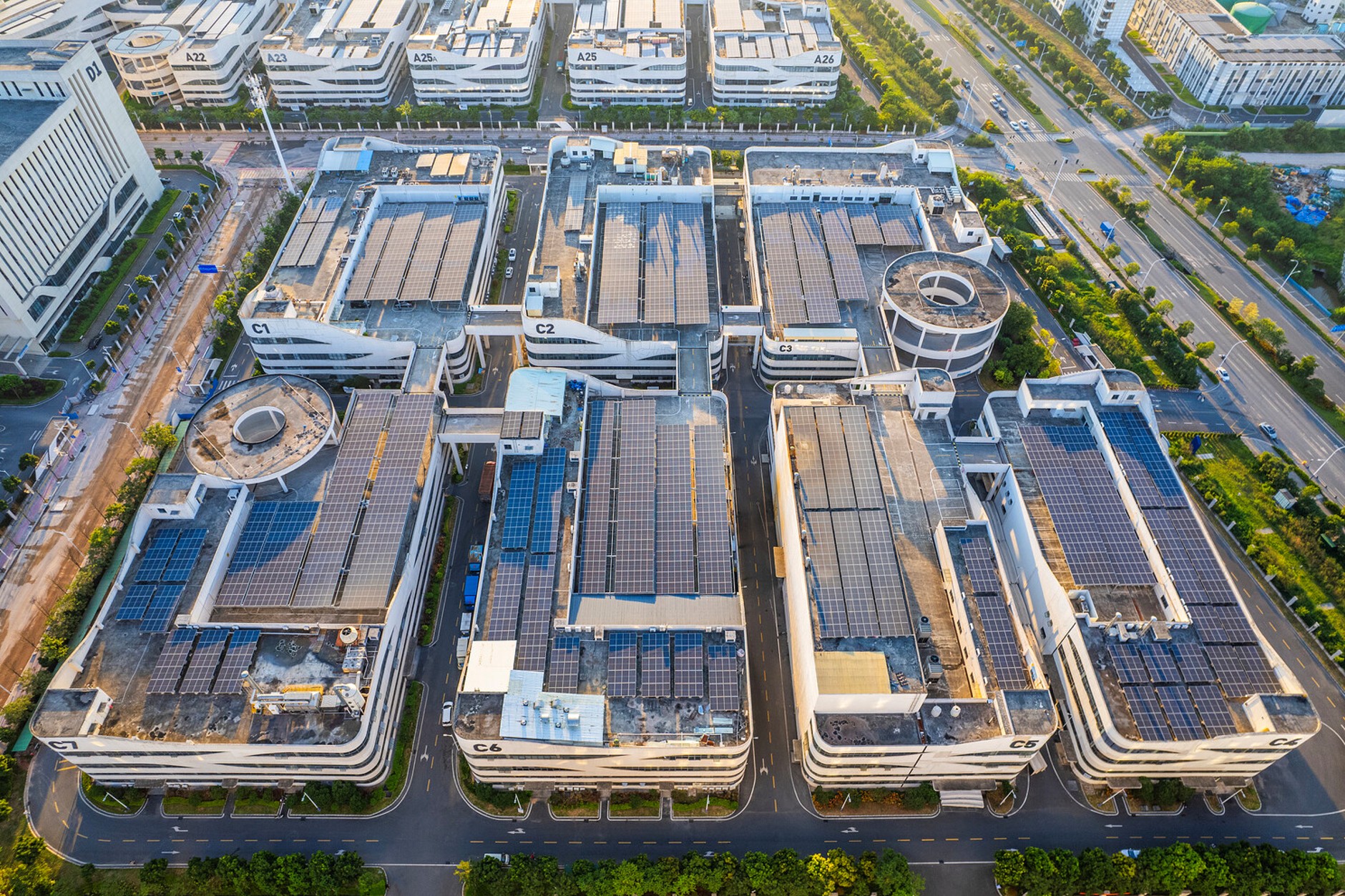
To develop zero-carbon parks
1.The first task is to accelerate the green energy transition, using measures such as direct green electricity supply and well-designed energy storage to explore new models for renewable energy supply and integration.
2.Second, the development of zero carbon parks should guide deep industrial decarbonisation, exploring a “green production with green power” model that helps traditional industries find decarbonisation pathways and supports the green, low-carbon, high-quality development of emerging industries.
3.Third, the drive for zero-carbon parks should support coordinated regional development by guiding energy-intensive industries to cluster in parks with sufficient resources, energy, and environmental capacity, helping create a more rational industrial division of labour and a virtuous cycle.
4.Fourth, green trade rules will be easier to meet within zero-carbon parks. Faced with international green trade barriers, zero-carbon parks can rely on traceable green energy and carbon footprint management to strengthen firms’ green competitiveness.
5.Fifth, a zero-carbon demonstration model should be set up to build experience and explore pathways for a “zero-carbon society”. According to the “Notice on Launching the Construction of Zero-Carbon Parks” (the Notice), the key lies in a “1 core + 5 guiding indicators” framework. The core indicator is carbon emissions per unit of energy consumption, with the benchmark set at different levels according to the park’s energy-use. While the five guiding indicators are not mandatory, they provide guidance for park development.
In addition, one point deserves special attention: although the Notice does not specify this in the indicators themselves, it states in the carbon accounting methodology that, in principle, the share of direct green electricity supply in zero-carbon parks should be at least 50%.
According to the Notice, zero-carbon parks should adapt to local conditions and develop direct green electricity supply models such as direct green power connection and the on-site connection of new energy sources to incremental distribution networks.
Looking ahead to “dual carbon control” in the 15th Five-Year Plan, it is clear that a national “15th Five-Year Plan action plan” is needed for peaking carbon emissions. China’s focus needs to be on two main areas:
promoting energy saving and carbon reduction on the demand side
optimising the energy mix on the supply side.
The emphasis also needs to be on doing three things well:
making good use of the assessment lever
managing new projects effectively
advancing decarbonisation retrofits for existing projects.
At the same time, the development of zero-carbon parks is a key growth point. Ultimately, this will help ensure a smooth path towards a reduction in carbon intensity and reaching peak carbon emissions.
English translation by Wanyuan Song | English edited by Helen Farrell

Contact Us:zerocarbon2060@outlook.com




copyright@2025 零碳时代,All Rights Reserved 备案号:闽ICP备14008486号-14
Fill out the form to receive a free electronic version of the magazine